Monday, November 17, 2008

Tis the Season....for Film Adaptations!

Holiday film season is here! In my weekend ritual of cruising the New York Times online, I have come across so many reviews for movies based on popular books.

So my question for the book club is:

-Which ones will you go see?

-Have you read the books?


Twilight

So I remember Tiff's previous post about the Twilight series, and I had never heard of the books before she mentioned them. But now there is apparently a movie, and it has definitely sparked my interest in wanting to read the book, or at least see the movie (if it ever makes its way to Hong Kong)

Opens November 21, 2008


Revolutionary Road


Have any of you read this Richard Yates classic? It's on my To-Read List, hope I can finish it before seeing the film! Kate Winslet and Leo reunited! Woohoo!

Opens December 26, 2008


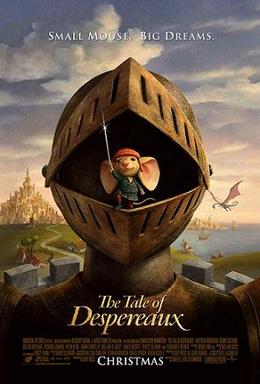
The Tale of Despereaux

A great modern children's book by Kate DiCamillo (also wrote Because of Winn-Dixie) . The animation and art direction look really great. I love the book's full title: The Tale of Despereaux: Being the Story of a Mouse, a Princess, Some Soup, and a Spool of Thread. I think that about sums up the plot!

Opens December 19, 2008
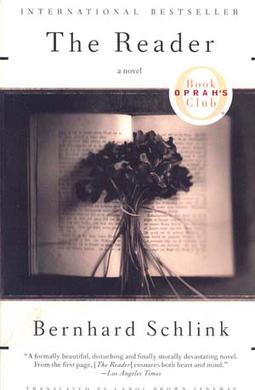


The Reader

I read this book back in NYU days, I really enjoyed it, and too bad I wasn't in a book club back then to talk about it. Would definitely recommend reading the book. The film's director previously directed the film adaptation of The Hours, which I personally feel is one of the best book to film adaptations I have ever seen. I hope he does equally great work on this film adaptation.

Opens December 10, 2008


The Curious Case of Benjamin Button

Anyone read F. Scott Fitzgerald's original short story? There was also a similar book that I saw at Barnes and Noble called The Confessions of Max Tivoli that I had wanted to read before hearing about the Benjamin Button movie. I'm not sure how different MT and BB are. I believe MT was also based off Fitzgerald's short.

http://www.newyorker.com/archive/2004/01/26/040126crbo_books

Opens December 25, 2008

Monday, November 3, 2008

Identical Strangers & Secrets and Lies


I’ve recently started reading Identical Strangers and am enjoying it. As I read, I keep thinking about the movie Secrets and Lies.

Have any of you seen it?

It’s one of my favorite movies. It’s about a 30ish successful, black adopted British woman who decides to find her birth mother. When she finally meets her mother, she discovers that her mother is white and has not told anyone in her family that she had her child adopted years ago.

I found it interesting how the main character in the movie starts her search to answer a simple question (who is my mother?) and ends up uncovering a host of family secrets. In a way, she finds herself with more questions than answers. So I’m interested to see where Elyse’s and Paula’s story leads, what other surprises are in store for them.

Friday, October 3, 2008

Jenn's Questions for Out Discussion

I finished Out and really enjoyed it. Here are some questions that I would be interested in hearing your responses to. I will post my own thoughts later since some of you might still be reading the book!

1. I didn't understand the title of the book when I first started reading it. By the end though, I thought the title to be very fitting. What does the title mean to you?

2. Do you think each character's way out was befitting for them?

3. Which woman did you empathize/sympathize with the most? The least?

4. How would you compare the treatment of women in Japanese to society to women in America?

5. What did you think of the secondary characters, Anna, the loan shark, the Brazilian? Were you satisfied with their storylines, and what did their characterizations add to the books' perception of male/female roles in Japan?

6. What one word would you use to best describe this book?

Tuesday, September 23, 2008

Out - Black comedy?

I started reading Out this past weekend and was pleasantly surprised at how much of it I found humorous. I found myself laughing out loud a number of times. I think it has to do with how twisted nearly all of the main characters are and how low they’re all willing to go look after themselves or make some quick $. I’m really enjoying the mix of dark humor with the ickier parts of the novel.

Any thoughts?

Am I weird to be finding comedy in such a sad/dark story?

Monday, September 22, 2008

Babar

I am deep into Out--I am finding it an eye-opening read and a look into Japanese culture. In the midst of the heaviness of Out, I thought would share with you a lighter article about one of my favorite children's book characters Babar and a new exhibition of Babar artwork review in today's NY Times.

Even though some may say that the Babar books promote colonialism, I still remember them with happy memories. I hope you enjoy the article (linked to above and pasted in below)--and let me know if you want to check out the exhibition.

The article makes me wonder whether we would ever want to reread some of our favorite children's books for bookclub. I wonder if we would still feel them same about them today as we did as children.

All About Mr. Elephant, in His Becoming Green Suit
By Edward Rothstein

What does the “very rich Old Lady” see in Babar the elephant? What, for that matter, do we see in him? Something appealing surely, even if we would not follow her example and give him a full purse to go shopping for a suit of a “becoming shade of green,” or do calisthenics with him or buy him a red roadster.
But if most of us don’t actually keep elephants in the strange way the Old Lady did, we have consistently invited Babar into our homes, along with his still thriving, ageless family. Since Jean de Brunhoff expanded and refined the bedtime stories told by his wife, Cécile, in 1931, and published them in French, Babar has been a constant companion. After that first book (translated as “The Story of Babar, the Little Elephant”), de Brunhoff published six more Babar tales before dying of tuberculosis in 1937 at 37.
After World War II his son Laurent, who first heard the stories as a child, took over the franchise. He has illustrated 37 books about this elephant orphan turned king. More than eight million Babar books have been sold.
In the compact, elegant exhibition “Drawing Babar: Early Drafts and Watercolors” at the
Morgan Library & Museum, we don’t learn too much more about the reasons for Babar’s appeal. We simply feel it, and then have to make sense of it. Speculation is restrained and simple demonstration preferred, an approach in keeping with Jean’s spare, precise narrative and laconic illustration, in which diverging lines of dots become tears, angled eyebrows signal anger and the varied curves of an elephant’s trunk evoke an inner life.
The show, organized by Christine Nelson, draws on the collection of Babar material the Morgan acquired in 2004 as a partial gift from Laurent and his two brothers. It includes more than 170 drafts and sketches for the first Babar books by both father and son. A complete sketchbook, a maquette, of the first Babar can be viewed, page by page, on two touch screens; custom-made carpets, based on rugs in the illustrations, mark out areas where books are available for reading.
Jean de Brunhoff’s illustration style (later emulated by Laurent) is charmingly and deliberately naïve. Multiple images of Babar running or riding an elevator suggest movement, comic strip balloons emerge from animals’ mouths as they call out, perspective is skewed or suggested simply by an object’s size. But an affectionate sophistication lies behind the innocence.
The elder de Brunhoff’s pencil sketches are quick and exuberant, experimenting with gestures and attitude. A display of Babar first editions show de Brunhoff’s self-consciously playful covers, the first depicting this king of the elephants marching with a placard like those once used to announce a spectacular new show (here, “Histoire de Babar”), tickets available within.
In the show’s two main galleries — one devoted to Jean de Brunhoff’s first classic book, the other to Laurent’s first, “Babar’s Cousin: That Rascal Arthur” (1946) — we see how the stories developed over time. Jean learned, for example, that when Babar’s mother is killed by a wicked hunter, he didn’t have to say that Babar was sad as he ran away; he could show it.
At first Babar’s suit was not a becoming shade of green at all, but a more mundane gray. Even the existence of the female cousin, Celeste, whom Babar eventually marries, was a later innovation. We see too that Laurent has a completely different method of preparation, his sketches are less experimental, his characters less weird.
The weirdness, though, is what makes the first Babar book — and sections of Jean de Brunhoff’s other books — so powerful. Think of the Old Lady “who has always been fond of little elephants” and gives Babar “whatever he wants.” Without any hint of animal passion, there is something discomfiting about this animal-human partnership.
And what attitudes are we supposed to have toward Babar himself? Escaping the countryside he arrives in a great town — like many another picaresque hero — and what is his first real desire? Fine clothes. And clothes are the first things he buys for his young cousins when they come to town.
Jean may have shared Babar’s preoccupation: his brother Michel was the editor of Paris Vogue, and his brother-in-law, Lucien Vogel, director of another fashion magazine. But there is something else going on here, surely, particularly when Babar later dresses all the elephants in his kingdom in outfits — some with the most ornate ornaments — that he bought for them.
The great temptation in reading children’s books is to see them as allegories, subliminally serving up lessons the way strange beings do in the dark woods of fairy tales. And allegories are latent in these books. Babar comes to town, is taught the ways of humanity and then returns home where he is crowned king. He does not brood. He is patient and industrious, and near the close of “Babar the King,” he even dreams of elephant-angels — Intelligence, Learning, Courage and Work — driving off comically demented figures called Despair, Misfortune, Stupidity and Laziness. Surely there are more than enough lessons in virtue here.
The taste for allegory has led to attacks on the Babar books accusing them of celebrating colonialism. (Illustrations of cannibals in the second Babar book don’t encourage complete skepticism on this point.) The playwright and critic
Ariel Dorfman, for example, argued that Babar’s history “is none other than the fulfillment of the dominant countries’ colonial dream.”
The uncivilized, unclothed native is taught the ways of civilization and returns home enlightened, unquestionably embracing the world that will ultimately bring him grief. In “Should We Burn Babar?” the author and educator Herbert Kohl argued that the books are sinister in their celebration of the Old Lady’s idle wealth and corrupt in their admiration of Babar, who allies with the very society that produced the colonial hunter who killed his mother.
But as the critic Adam Gopnik points out in a rich, suggestive essay in the show’s catalog, these arguments miss the point. The saga is not an “unconscious instance of the French colonial imagination,” Mr. Gopnik writes, “it is a self-conscious comedy about the French colonial imagination.” Jean de Brunhoff knew precisely what he was doing. Invoking the colonial world of the 1930s and France’s mission of civilizing subjugated peoples, he was also satirizing that world, celebrating some things while being wary of others, knowing the need for civilization while also knowing the costs and inevitable failures that accompany it.
Finding straightforward allegory — or an unambiguous political message — simply does not work. Admiration and satire are intertwined. Cornelius, the elephants’ elder, is meant to seem extremely savvy when he proposes making Babar king because Babar “has learned so much living among men.” But I can easily imagine Jean de Brunhoff laughing when, in response, he has King Babar turn to Cornelius and say, “You have good ideas.” Babar makes him a general and gives him his hat.
The child reader will not necessarily sense Babar’s pomposity here, but over time such ambiguities will affect perceptions, as they do throughout childhood’s perpetual trials. Yes, there is an allegorical element in Babar, which is why clothes are so important. Clothes represent culture or rather cultivation. They present the wearer in a particular social role. (In one book pictures appear of the workers of Babar’s town, Celesteville, dressed according to their occupations.) Clothes are the counterparts of social manners, the accouterments of civilization. Babar begins as a child in the human city, naked, riding up and down in a department store elevator just for the fun of it and being told, “This is not a toy, Mr. Elephant.” Once he is clothed in his green suit, he leaves childish things behind.
But clothes alone don’t make the elephant, and we feel some pangs watching the unclothed mothers of Babar’s cousins relegated to running in the dust, while their well-dressed children get to ride in a car. There are other pains as well. One of the most upsetting images in Jean de Brunhoff’s books may be of Babar and Celeste, captured and costumed, made to perform in a circus. The indignity is palpable.
There is something melancholy in Babar’s world. It is not really the world of 1930s Paris. Babar’s utopian Celesteville combines ’30s technology with the cultural life of the Belle Époque.
Did de Brunhoff know that these Halls of Amusement or Industry could no longer stand as firmly as they once did? Does that account for the nostalgia they seem to reflect? What world did he imagine was taking shape for his sons? As the ’30s progressed, it had to have been less clear what the divisions were between the animal and the human, or what civilization itself could hope for.
One of the exhibition’s labels points out that there was another beloved childhood character who came out of the same Parisian milieu: Curious George. Margret and H. A. Rey carried the manuscript for that book with them as they bicycled out of Paris in 1940, fleeing the Nazis. They might have been influenced by Babar, but their colonial hunter, the man in the yellow hat, didn’t murder his prey. He took the monkey away. And he brought him to the New World, where George’s anarchic, unclothed spirit roamed so freely it might have tried even Babar’s patience
.

“Drawing Babar: Early Drafts and Watercolors” remains through Jan. 4 at the Morgan Library & Museum, 225 Madison Avenue, at 36th Street; (212) 685-0008.

Monday, September 15, 2008

The House at Sugar Beach (2008)

I read this great review in Entertainment Weekly and thought I'd share:

Book Review
The House at Sugar Beach (2008)
Helene Cooper


When Helene Cooper was 8 years old, her mother bought her a playmate. At the time, Cooper — enjoying a privileged childhood as the daughter of a wealthy Liberian family — was marooned at the family's flashy new 22-room Sugar Beach mansion, far from the bustle and hum of Monrovia, Liberia's capital. With only her scary cousin Vicky (who ''saw'' spirits) and her baby sister Marlene for company, Cooper was lonely. So the skinny, bowlegged tribal girl named Eunice who appeared one day in 1974 became a sister in every sense but one: When a bloody 1980 coup d'état sent the country's political system reeling, and soldiers began butchering most people in Cooper's moneyed class, Eunice was not forced to flee to the U.S. with the rest of the family but was able to stay behind. Though many terrible things happened to Cooper — including the gang rape of her mother — she was perhaps most affected by Eunice's decision to remain in Liberia. ''In my sheltered existence, I had never dug deep enough to wonder how much native Liberians resented us,'' Cooper writes. ''I had been shocked [to learn] the level of hatred.... Did Eunice feel that way too?'' Unbelievably, Starbucks has made The House at Sugar Beach its fall book pick, so it may actually be bought and read — a boon for any book, but especially nice for this slim, searing little memoir. To understand what happened in Liberia is to understand what has happened in much of Africa, and Cooper tells it not like a seasoned journalist — which is what she is — but like a poet.

Saturday, September 13, 2008

"Out" and about in Hong Kong!

Hi Girls!

Glad you are all enjoying and using the blog! I'm definitely interested in reading some of the other books you talked about in your posts...if I can find them here!

I've been reading Out during my commutes to and from class, and any other opportunity I get! I'm about two thirds done and it has been a great book so far. Can't wait to write my thoughts about it when I'm done.

It's interesting reading this book in an Asian country, because I can actually witness some of those things the book talks about in terms of how women are treated in society and the workplace. While I don't think it's as bad as in Japan, in Hong Kong it seems you have to be young, pretty and well dressed to succeed at work. Posters in the subway emphasize dieting for women, even though all the girls here are super slim. It seems to echo the view that women are only as good as they look, and once they get older they become obsolete.

In addition to reading the book, I've been scoping out how to get hold of other English books so I can read the upcoming selections for the book club. The university library has an English selection with a modest amount of contemporary fiction novels. I also visited a public library, but I can't check out any materials until I get a Hong Kong ID card, which I can't get until I've been here over 180 days. So my goal is to find a good Western/English bookstore. Luckily the past Fulbrighter, who's project was centered on writing poetry, gave me some good suggestions. and as soon as I get better (I have a touch of flu/sinus infection) I'm going to check them out.

Miss you all!